Visual concepts, learned without labels
DisParQ.Self-Supervised Part Concepts for Interpretable Vision Foundation Models
An image, understood through its parts.
Discover which concepts appear, where they occur, and how they vary, using a discrete representation learned from a frozen vision model.
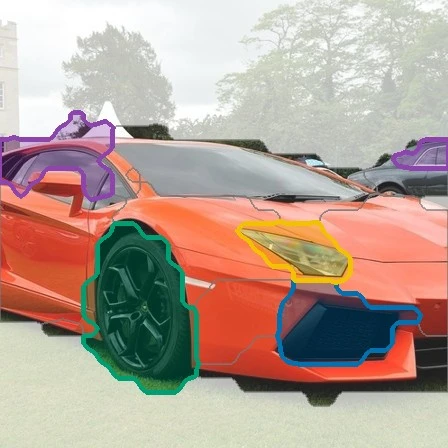
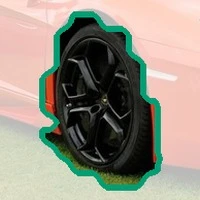 Wheel
Wheel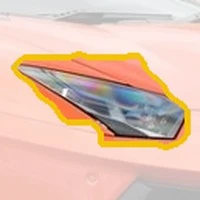 Headlight
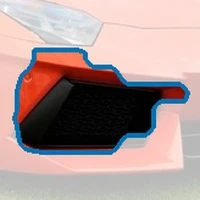 Air vent
Jagiellonian University / Max Planck Institute for Informatics
* Equal contribution




1 Jagiellonian University, Faculty of Mathematics and Computer Science
2 Jagiellonian University, Doctoral School of Exact and Natural Sciences
3 Max Planck Institute for Informatics, Saarland Informatics Campus
4 Jagiellonian University, Jagiellonian Center for Artificial Intelligence
5 Ardigen SA
WATCH THE FILM
DisParQ in 50 seconds.
From an image to interpretable parts and a representation for multiple tasks. See how it all fits together.
THE IDEA
A visual vocabulary. A discrete description.
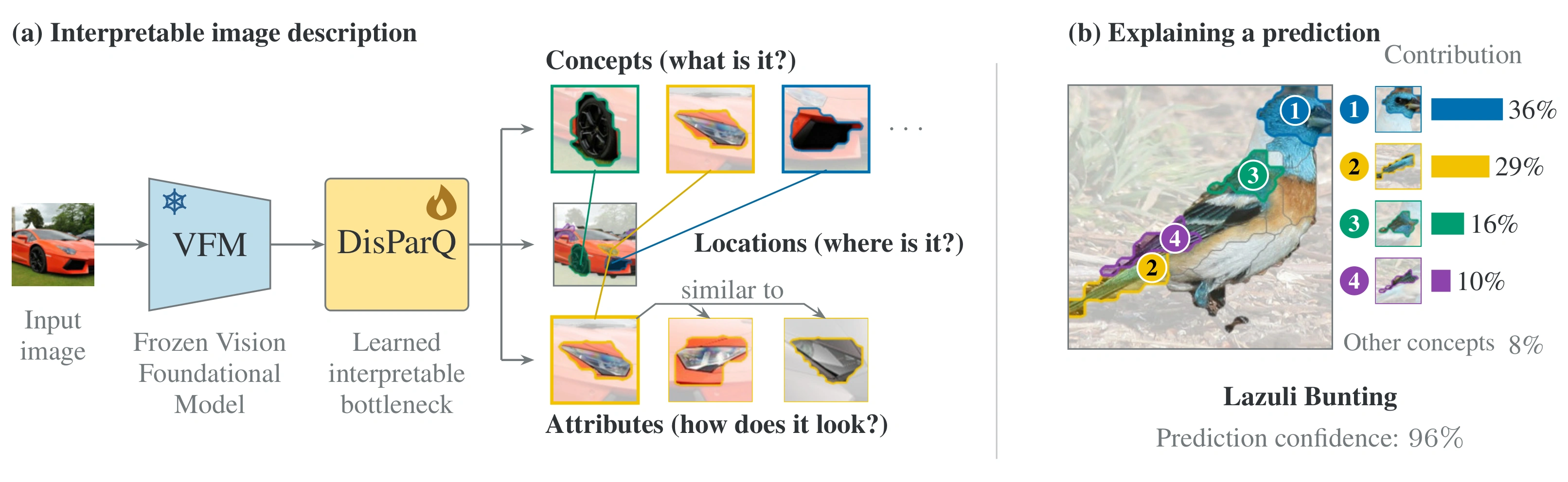
DisParQ (Discrete Parts with Quantized attributes) separates a concept’s identity from its appearance.
Swipe across the diagram to see the separated parts.
A shared concept identity, a location and a discrete appearance code. Three selected parts are shown for illustration.
A few concepts
A sparse selection from a learned dictionary describes the parts present in each image.
K concepts from N prototypesOne identity per location
Every spatial location belongs to exactly one selected concept, forming non-overlapping regions.
One concept at each locationDiscrete appearance
Quantized attributes retain the differences between occurrences of the same concept.
Identity + attributeSwipe across the figure on a small screen, or open the full-size image.
THE METHOD, AT A GLANCE
Keep your backbone. Add interpretability.
A compact adapter learns a discrete description of the image on top of a frozen vision foundation model.
 DisParQ
Interpretability
Tasks
LEARNING BY DISTILLATION
The teacher stays fixed. The adapter learns.
DisParQ reconstructs the VFM’s features through its part identities, locations and quantized attributes.
Learn to reconstruct the teacher’s features
Architecture and feature bars are schematic. The decoded representation can replace the VFM’s global feature for downstream tasks.
Read the full method →LOOK CLOSER
Explore what the model sees.
Open an image, inspect its concepts, then find where those concepts appear elsewhere. The colored regions show each image’s learned concept map. The explorer contains precomputed outputs from five dataset-specific models.
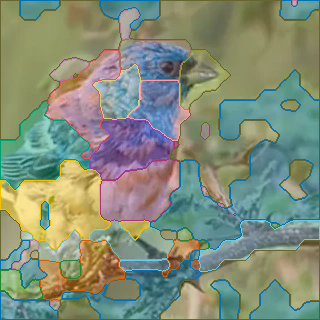
CUB-200-2011
A bird, part by part
Inspect the concepts in a Lazuli Bunting image.
Inspect image #5610 →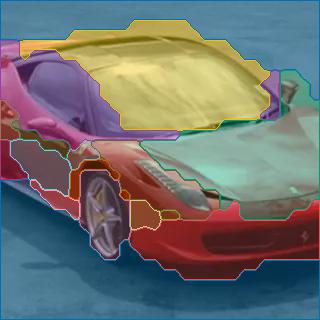
Stanford Cars
More than a car silhouette
Explore concepts in a Ferrari 458 Italia image.
Inspect image #7878 →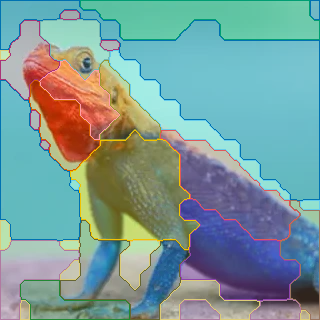
PartImageNet
A vocabulary of visual parts
Follow an agama image into its learned concepts.
Inspect image #17352 →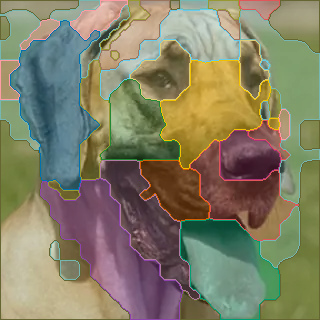
Stanford Dogs
A portrait in concepts
Explore a Great Dane's learned concept map.
Inspect image #1784 →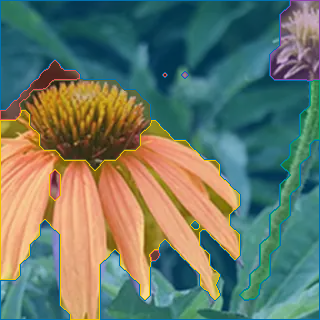
Oxford Flowers 102
Layers of a bloom
Trace the concepts in a purple coneflower image.
Inspect image #379 →The explorer uses DINOv2-B/14 for PartImageNet and DINOv2-S/14 for the other four datasets. Main paper comparisons generally use DINOv2-B/14. Concept IDs belong to each model’s own dictionary.
THE EVIDENCE
Interpretable parts. Useful representations.
Evaluated across seven datasets, with one label-free model trained per dataset. Labels are used for downstream probes and evaluation.
ImageNet top-1 accuracy
Linear probing through the discrete bottleneck. Frozen DINOv2 teacher: 83.4%.
Recognition results → 69%Human part identification
120 participants. PIP-Net: 60%, CFM: 53%. Four-choice task, with 25% chance.
Human evaluation → 79.7%Part retrieval at rank 1
PartImageNet validation, 32 × 32 grid. Retrieve corresponding parts across images.
Retrieval results →IDENTITY & APPEARANCE
The same concept. Different appearances.
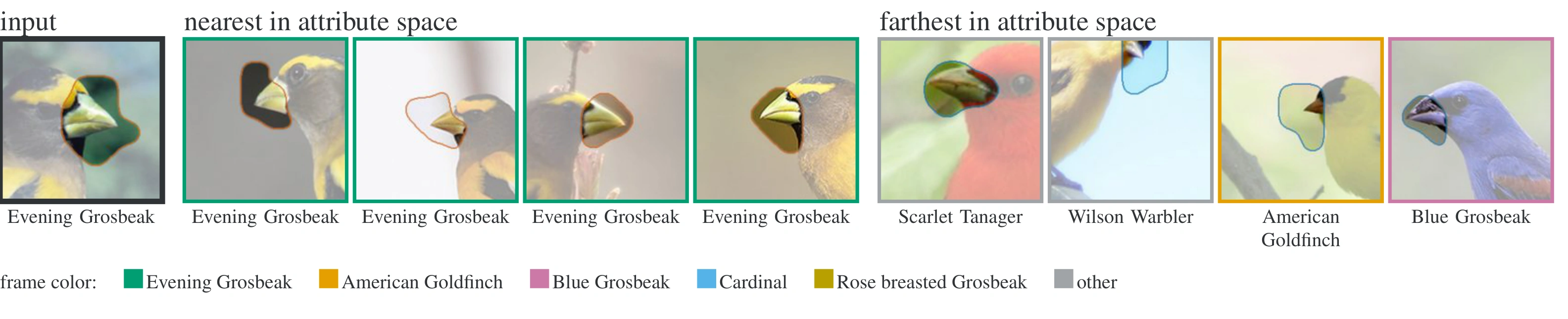
Concept identity tells us which part we are looking at. Its attribute describes how that particular occurrence looks. These examples from the supplement compare the nearest and farthest attribute matches within a single learned concept.
Understand the attributes →Follow the link from the query to its closest illustrated appearance, or select another headlight to compare.
Swipe across the map to explore all 23 appearances.
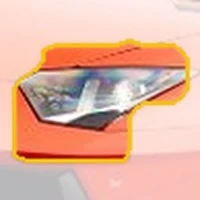
Appearance 22 of 23
An illustrative appearance map using paper and video crops. Positions are arranged by visual similarity, not measured PCA coordinates or retrieval distances. The measured comparisons from the supplement follow below.
On a small screen, swipe across each figure to see all matches.
PartImageNet · Quadruped heads

CUB-200-2011 · Bird beaks
Stanford Cars · A grille-like concept
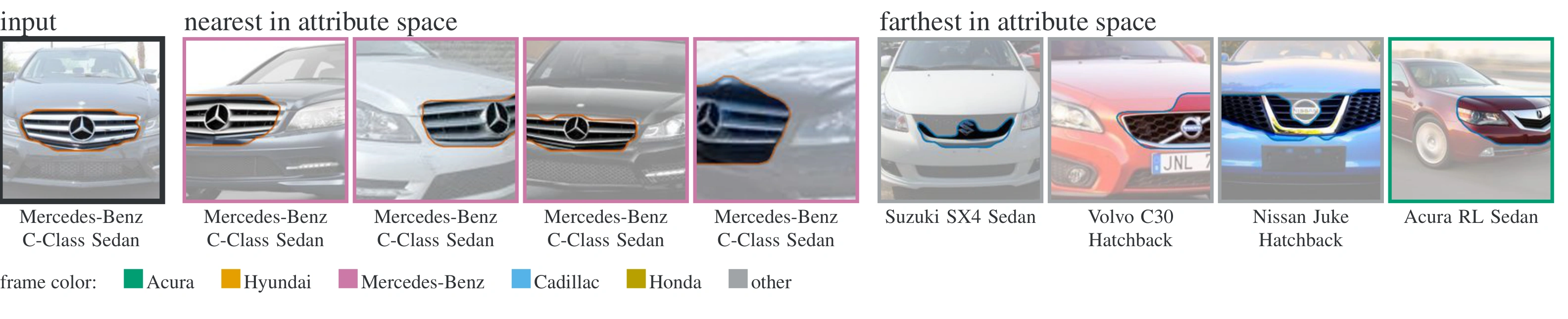
Each row comes from the paper’s supplementary attribute analysis. Matches are ranked by cosine similarity of the full quantized attribute. Frame colors indicate class, species or car make, while outlines indicate distance to the input. Dataset class names are shown for interpretation and were not used to train these concepts. Open any set to view it at full resolution.
GO FURTHER
From features to parts.
Read the full method, evaluation protocols and limitations, or inspect the concepts for yourself.
Citation
If you use DisParQ in your research, please cite our paper. The full method, evaluation protocols and supplementary results are included in the paper PDF.
@misc{pardyl2026disparq,
  title         = {DisParQ: Self-Supervised Part Concepts for Interpretable Vision Foundation Models},
  author        = {Adam Pardyl and Siddhartha Gairola and Sukrut Rao and Adam Wr{\'{o}}bel and Bartosz Zieli{\'{n}}ski and Bernt Schiele and Dawid Rymarczyk},
  year          = {2026},
  eprint        = {2610.09802},
  archivePrefix = {arXiv},
  primaryClass  = {cs.CV},
  url           = {https://arxiv.org/abs/2610.09802}
}
Acknowledgments
Adam Pardyl's research was supported by a grant from the Faculty of Mathematics and Computer Science under the Strategic Programme Excellence Initiative at Jagiellonian University. Siddhartha Gairola's research was supported in part by ELSA – European Lighthouse on Secure and Safe AI, funded by the European Union under grant agreement No. 101070617. Sukrut Rao and Bernt Schiele were funded in part by the Deutsche Forschungsgemeinschaft (DFG, German Research Foundation) – GRK 2853/1 “Neuroexplicit Models of Language, Vision, and Action” – project number 471607914. The work of Bartosz Zieliński and Dawid Rymarczyk was funded by the “Interpretable and Interactive Multimodal Retrieval in Drug Discovery” project. This project (FENG.02.02-IP.05-0040/23) is carried out within the First Team programme of the Foundation for Polish Science co-financed by the European Union under the European Funds for Smart Economy 2021–2027 (FENG).
Views and opinions expressed are, however, those of the authors only and do not necessarily reflect those of the European Union or European Commission. Neither the European Union nor the European Commission can be held responsible for them.
We would like to thank and acknowledge the Max Planck Computing and Data Facility (MPCDF), whose HPC systems supported a substantial portion of our experiments, including the development of the proposed method, reproduction of baselines, and computation of the final results. Some experiments were performed on servers purchased with funds from the flagship project entitled “Artificial Intelligence Computing Center Core Facility” from the DigiWorld Priority Research Area within the Excellence Initiative – Research University program at Jagiellonian University in Kraków. We gratefully acknowledge Polish high-performance computing infrastructure PLGrid (HPC Center: ACK Cyfronet AGH) for providing computer facilities and support within computational grant no. PLG/2026/019504 and PLG/2025/018688.
Contact
For questions about DisParQ, please contact Adam Pardyl at [email protected].